The history of Osteopathy: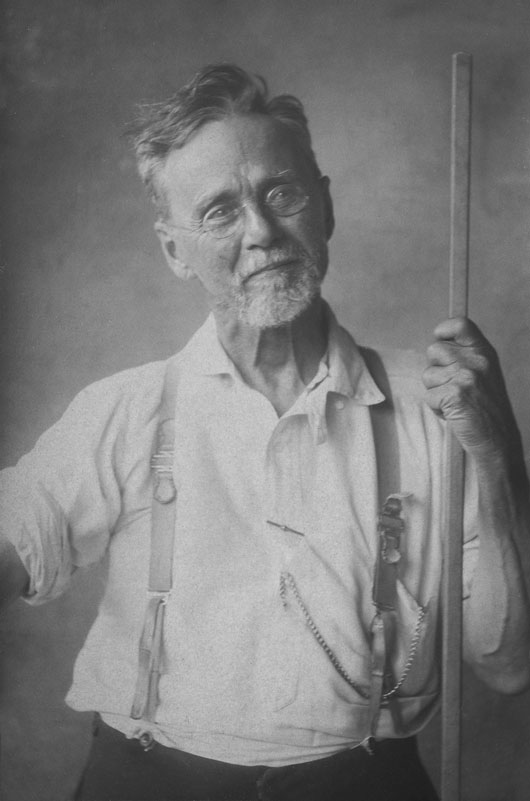
Dr. Andrew Taylor Still, born in 1848 in Kansas in the US, is the founder of Osteopathy.
He was a self-taught graduate physician who, at forty-six years of age, decided to break from conventional medicine. He didn’t agree with the traditional methods used to treat patients.
Continuing his medicine and research, he will perfect the manual ancient medicines thanks to his strong knowledge of anatomy, physiology and mechanical engineering.
In 1896, he created the American School of Osteopathy in Kirksville, Missouri.
After Andrew T.S. ’s death, in 1917, his student J.M. Littlejohn returned to London where he founded the British School of Osteopathy, from which the European Osteopathic movement originated.
Osteopathy is known worldwide, but its recognition and popularity depend on each country’s health system.
At the moment, Osteopathy is recognised and regulated in twelve European countries, including the UK (since 1993; 60.5 million people for 4,300 Osteopaths) and France (since 2002; 67 million people for 25,000 Osteopaths)
In Ireland, even though it is not officially recognised, the OCI has been following the FORE European directives since 2009. The OCI is working on a regulation under CORU. Osteopaths that are registered members of the OCI guarantee a good level of knowledge and service and can also issue receipts for the patient’s health insurance refund.
What is Osteopathy:
Osteopathy is a natural and manual form of medicine which consists in understanding the body as a whole in order to resolve and prevent tissue mobility restrictions.
An osteopath is only a human engineer, who should understand all the laws governing his engine and thereby master disease.
Thanks to their deep medical knowledge, your Osteopath will investigate, through touch, the cause of the pain or issue and will use different manual techniques to reach the different levels of the dysfunction which can be found in the articular joints, skull, ligaments, tendons, muscles, fascias, organs, central and peripheral nervous system, circulatory system, cerebrospinal fluid (craniosacral).
Osteopathy is based on four principles:
- The body unity: the body is seen as a whole. All its different parts are linked to one another and a ‘malfunction’ somewhere can create an issue, which can be localised or spread throughout the body.
- The structure rules the function: the mechanical body needs to stay in good health in order to guarantee the good functioning of the tissues and organs (for example: a pelvis blockage can create an issue with the colon).
- The free blood circulation and nervous information: free blood circulation and nervous information are necessary for the body to function properly.
- The body has its own regulation mechanisms: the body can heal itself. When the level of stress is too much and the body cannot handle it, it’s when Osteopathy becomes useful.
To find health should be the object of the doctor. Any one can find disease.In brief, to give a simple picture, Osteopathy could be close to repairing a car or a washing-machine.
To be able to work properly, those machines need to have all parts in good working shape like good filters (kidneys), engine (heart), electricity (nervous system), a functioning pipe system with clean fluids (circulatory system). If all the components work properly, the system is healthy and autonomous. The car works until there is a mechanical problem which needs to be repaired. The Osteopath will therefore choose the right tool (technique) to treat the patient’s issue.
The body does not always manage to adjust the conflicts between ascending and descending dysfunctions. This can create recurrent articular and rheumatic pains within ligaments and tissues. The work of the Osteopath will be to understand, analyse and dismantle the mechanism of this conflict, otherwise the problem will always come back.
A metabolic, visceral, energy or psychoemotional disorder will also give more problems on the weakest appendage, that is to say, the one that already had recurrent or traumatic pains.
Therefore, the goal for the Osteopath will be to understand where the source of the disorder is in order to start the treatment and reach a long term health return.
The Osteopath will make sure of the efficient distribution and return of the neurological information and of the body’s pump systems: respiratory system (air pump), circulatory system (heart, liver pumps), cranial system (cerebrospinal fluid).
Osteopathy for who and what?
Osteopathy is for all ages and all health conditions
It is not only for bones but approaches a wide range of disorders.
You can therefore consult an Osteopath for a muskuloskeletal pain but also for digestive, respiratory, gynaecological, neurological, hormonal, circulatory, dermatological, dental, ocular, earing, psycho-emotional disorders.
In prevention:
You can visit an Osteopath once or twice a year to prevent the arising of problems.
Emotional (grief…) or mechanical trauma (car accident, a fall...) can leave marks in the body without the person being aware of it.
Also because you could detect any weakness or recurrent organic or mechanical disorder (recurrent cough, cold, stiff shoulder, recurrent tiredness post vaccination,…).
Osteopathy is also useful all along growth and sports training.
When the body is in pain, it is already late.
Feminine life:
Osteopathy can help a woman throughout her life. It can help with painful or irregular menstrual cycles, with digestive problems, back pains, migraines, cystitis, acne. It can also help adapting to contraception, to regulate hormonal fluctuations, with pelvis or gynaecological pains and stiffness, pre or post-surgery (cyst, miscarriage,...), fertility issues, menopause.
Pregnancy:
Osteopathy can help the future mother all along her pregnancy while she undergoes strong mechanical and hormonal modifications which can be taxing on a woman’s body.
This can create back or coccyx pains, symphysis pubis disorder (SPD), sciatica, or digestive problems (reflux, constipation, nausea...), circulatory disorders (haemorrhoids, heavy legs, headaches).
It can also help changing and improving the baby’s position in the body.
Osteopathy can also help the mother with post-partum or lactation issues.
Paediatrics:
Osteopathy can also be performed on babies and children.
The birth is not easy and the baby can suffer during the birth process.
A baby naturally comes into this world with a system that it is not fully developed. This can cause issues and the baby may need some help.
A long labour, tools such as forceps or vacuum or a C-section can also be hard on a baby.
You can bring your baby from an early age for digestive troubles (reflux, constipation, bowels pains), sleep and mood problems, breathing disorders, morphologic issues (torticollis, flat skull called plagiocephaly, foot or hip malformation, stiffness...), delay of psychomotor development (crawling, standing, falling...), primitive reflexes disorders, breastfeeding problems, otitis, rhinitis, eczema, teeth delay...
Older children can also benefit from Osteopathy as they grow.
Osteopathy can help with school changes, learning disorders, dyslexia, ADHD, mood disorders, wearing of glasses or braces, recover after a strong flu or bug episode…
Sport/ work/ activity:
Sport activities, our jobs or hobbies affect the mechanical functioning of our body in different ways.
The Osteopath will detect the mobility issue caused by repetitive strain or an injury (tear, tendinitis, fracture, sprain).
It will prevent further damage and it will strengthen the body for future sport activities.
Organic weaknesses or old injuries can also affect your posture and mechanical effort.
It is also useful for young children who are involved, from a very young age, in sports such as Gaelic football or soccer.
Elders:
As the body and the vital functions slow down, Osteopathy is useful for older people to maintain their full range of mobility and therefore their tonicity, vitality.
It will also help in detecting their weaknesses and therefore to strengthen their immune system to prevent from or recover after an illness, a fall, from rheumatic pains...
People with disabilities:
Finding and adapting to each body and mind specificities, the Osteopath can receive all kinds of people with any physical disability (wheelchair, spina bifida, prosthetic, …) or psychological disabilities (Down syndrome, autism…).
The Osteopathy appointment:
A student of life must take in each part of the body anf study its uses and relations to other parts and systems
An appointment lasts one hour.
To consult an Osteopath you don’t need a GP referral.
For the first appointment, you will be asked about your health history and to bring with you any medical exams you have (X ray, scan, blood test, medication list)
The role of the Osteopath is also to think about all the differential diagnoses in order to anticipate what else your pain might be, and to guide you towards further medical examinations if necessary.
The Osteopath will be able to communicate on your behalf with your GP, physiotherapist or other medical/healthcare providers for a better mutual, reciprocal understanding, working towards your overall health.
During the appointment, the Osteopath could ask you to remove your clothes to get a better understanding of your posture and to be able to connect with your skin.
Then, the Osteopath will start to examine you with their hands to find where your pains come from.
To correct those dysfunctions, the Osteopath will use then different techniques from the high velocity and low range motion to reach your joint level (the famous but really precise "crack"), to tissular, visceral techniques, to the most delicate techniques reflecting the involuntary movements of the body (craniosacral and cerebrospinal fluid, autonomous nervous system and embryologic motilities).
Reaching the cause of your unbalance and to restore your health function on a long term will be the Osteopath’s goal.
It could surprise you that the Osteopath may not touch you directly or spend much time on the area that is painful for you as this could just be a symptom of a general unbalance.
The Osteopath will always ask you in advance if you agree to receive a manipulation.
As its goal is to act precisely and deeply on a disorder, his main role is not to give you exercises.
If necessary, you will be asked to come back to continue the work after two or three weeks (most of the time) or maybe even after two or three months (for a neurological cause). This will depend on the origin of your problem.
The Osteopath's goal is to deeply reach the cause of your problem, so your body will need time to process and integrate the information.
Three weeks are usually necessary to reset the health of a person’s body and to give it time to recover before another appointment (blood renewal time).
An appointment for a baby or a child can be challenging as it may not be easy to keep a child calm straight away. Sometimes, the first appointment is just an initial contact with the practitioner and clinic. You will be asked to bring everything which could entertain the child (toys, food, songs,...)
As the person cannot be separated from their life environment, some Osteopaths will also consider different parts of your life such as your nutrition, medications, emotions, transgenerational and genetic influence.
An osteopath is taught that Nature is to be trusted to the end.
Aurélie the Osteopath is also trained in Clinic Psychosomatic to put in link the meaning of your physical pains with your emotional and transgenerational meaning if needed. This can be added as a conversation like "verbal keys" during the osteopathic treatment.
To reach a deeper and cellular level, Aurélie is also trained in the Total Reset Method ( or Naet method) to treat allergies, intolerances , hypersensitivities, hormonal, blood, immune, emotional disorders.When it is needed because the dysfunction could be too deep, the Total Reset Method can be added to Osteopathy from a second appointment.